UNDIP, Semarang (November 10) – Scientific innovation does not always emerge from sophisticated laboratories, but often from a deep sensitivity to real-world challenges. This principle is firmly embraced by Prof. Dr. Ir. Andri Cahyo Kumoro, S.T., M.T., IPU, ASEAN Eng., Professor at the Department of Chemical Engineering, Faculty of Engineering, Universitas Diponegoro (UNDIP). He is widely recognized as one of the world’s top 2% most influential researchers for 2024–2025. Through his research on functional foods and biomedical materials derived from Indonesia’s biological resources, Prof. Andri offers a scientific approach rooted in the nation’s rich biodiversity, with a strong orientation toward improving public health and societal well-being.
Since joining UNDIP in 1998, Prof. Andri has been known for his expertise in agro-industrial processing, industrial waste treatment technologies, and chemical engineering system modeling. His ability to integrate process engineering with the vast potential of tropical natural resources has opened new pathways for the development of health-oriented food products and environmentally friendly biomaterials.
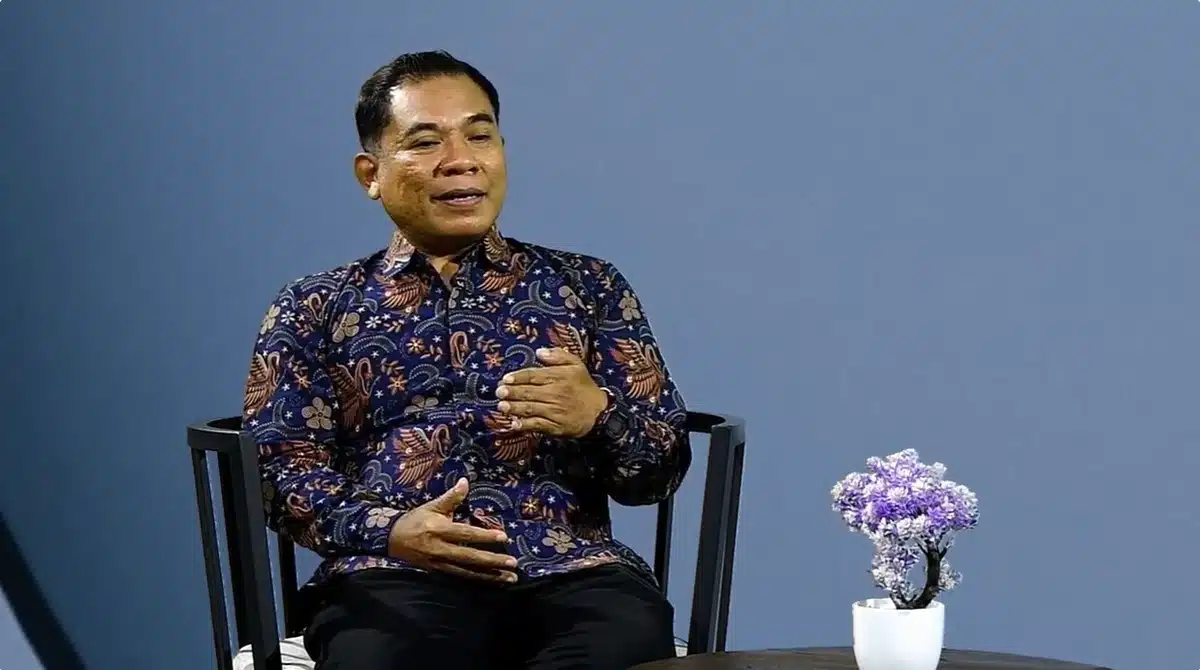
During his appearance on the UNDIP Podcast, Prof. Andri shared his long and challenging journey into the world of research. During the late 1990s economic crisis, opportunities for domestic scholarships were extremely limited. Through perseverance, he secured a full scholarship at the University of Malaya, Malaysia, to pursue his doctoral studies. There, he specialized in supercritical fluid extraction technology, a cutting-edge method at the time, and conducted research on bioactive compounds from Andrographis paniculata (sambiloto), a medicinal plant native to Southeast Asia that has since become a foundation for many modern biomedical studies.
“In Malaysia, I had the opportunity to learn every stage of this research—from initial processing, equipment design and operation, to the analytical technologies and methods,” he explained.
Upon returning to Indonesia, Prof. Andri was driven by a strong commitment to develop science that delivers tangible benefits to society. His research focuses on utilizing Indonesia’s tropical natural resources to create functional foods—foods that not only provide nutrition but also contain bioactive compounds such as antioxidants and anti-inflammatory agents that support health. According to him, food should not only be palatable but also deliver added value for public well-being.
His research has become a reference for the international scientific community, inspiring cross-border collaborations and strengthening UNDIP’s position as a center of excellence in bioresource-based food research.
“I firmly believe that science must have a clear social purpose. It originates from society and must return benefits to society,” he stated.
This vision aligns closely with the Sustainable Development Goals (SDGs), particularly SDG 2 (Zero Hunger), SDG 3 (Good Health and Well-being), and SDG 12 (Responsible Consumption and Production).
Prof. Andri’s research is motivated by growing concerns over the increasing prevalence of degenerative diseases among younger populations, including diabetes, hypertension, and obesity—conditions driven by modern dietary patterns and insufficient intake of fiber and antioxidants. Through a functional food approach, food products are designed not merely to meet basic nutritional needs (carbohydrates, proteins, and fats), but also to provide natural bioactive compounds that function as antioxidants, anti-inflammatory agents, and immune system enhancers.
Innovative products currently under development by his team at the Institute of Food and Remedial Biomaterial (INFARMA) include natural vitamin powder beverages derived from cashew apples; antioxidant-rich herbal ice cream; low-caffeine coffee products made from snake fruit seeds; and the utilization of rambutan seeds as an alternative cocoa ingredient rich in plant-based fats—offering new economic opportunities based on local biodiversity. These innovations also support SDG 13 (Climate Action) and SDG 15 (Life on Land) through a Zero Waste approach to agricultural residue management, strengthening food security and increasing the economic value of previously underutilized materials.
Despite these achievements, significant challenges remain, including stringent product safety standards, regulatory frameworks for natural ingredients, and public consumption habits that favor fast food. In response, Prof. Andri emphasizes the importance of nutritional literacy and behavioral change, particularly among younger generations.
Beyond food innovation, Prof. Andri’s research also extends into the biomedical field. Together with the INFARMA team, he has developed medical sutures based on glucomannan derived from porang and seaweed, offering an environmentally friendly and renewable alternative to conventional medical materials. This research supports SDG 9 (Industry, Innovation, and Infrastructure) and SDG 12 (Sustainable Production) by leveraging local biological resources for high-value medical applications.
According to Prof. Andri, the availability of integrated laboratory facilities at UNDIP is a crucial asset in strengthening multidisciplinary research and cross-faculty collaboration. Through the World Class University (WCU) program initiated by UNDIP’s Institute for Research and Community Service (LPPM), research facilities are now increasingly well-equipped for food processing and product design, advanced biomaterials development, and bioactive compound characterization.
“These facilities are open for collaboration with other universities and industry partners. Science must be open, because innovation is born from openness,” he emphasized.
“Our laboratories are open. Researchers from other institutions are welcome. This is not about competition, but about shared benefits.”
Notably, Prof. Andri designs his research to be applicable and transferable to MSMEs and community groups through mentoring, training, and product downstreaming. In this way, scientific knowledge does not remain confined to publications but evolves into a broader ecosystem of impact. He stresses the importance of technology transfer so that university research moves beyond academic journals and can be implemented in local food production that meets health, halal, and environmental standards. This principle aligns with SDG 8 (Decent Work and Economic Growth) and SDG 17 (Partnerships for the Goals).
Looking ahead, Prof. Andri envisions that over the next five to ten years, research on food and biomedical products derived from Indonesia’s natural resources will focus on raw material self-sufficiency and national nutritional resilience, transforming them into affordable, high-quality, and health-oriented flagship products.
“Indonesia must be capable of managing its biological wealth to ensure sustainable food systems and public health,” he stated.
“Those who control food will control the future,” he added, quoting President Prabowo.
Through his work, Prof. Andri demonstrates that chemical engineering extends beyond theories of mass and energy transfer to become a tangible means of creating sustainable innovations that address social, economic, and environmental dimensions. This represents the true embodiment of UNDIP Bermartabat, UNDIP Bermanfaat—where impactful science, human-centered research, and technology rooted in local wisdom contribute to a healthier and more sustainable future.
(Public Communication/UNDIP/DHW & Zaila)